
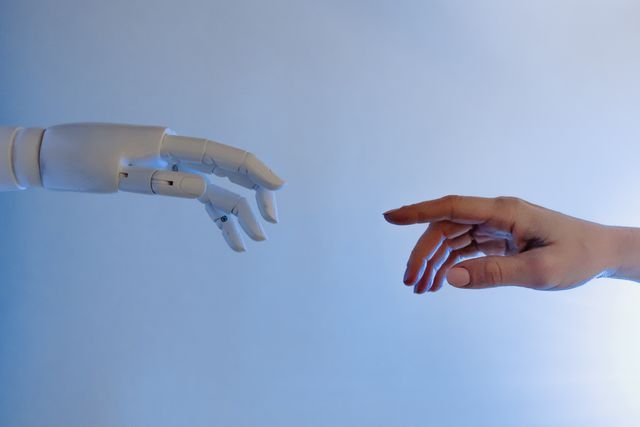
Artificial intelligence is changing how people understand and manage their health. Instead of waiting until symptoms appear, AI-assisted health tools can analyze health and lifestyle information, identify patterns, and help estimate potential health risks.
But can AI actually predict your health risks?
AI cannot predict your future health with certainty or replace a medical diagnosis. However, AI-assisted health risk assessment can analyze large amounts of health information, identify patterns associated with certain risks, and help people understand where they may need to pay closer attention.
This approach is becoming increasingly important as healthcare moves toward prevention, personalized health, and earlier identification of potential risks.
What Is AI Health Risk Assessment?
AI health risk assessment is the use of artificial intelligence and data analysis to identify patterns in health information that may be associated with potential health risks.
Depending on the system, the information analyzed may include factors such as:
- Age and demographic information
- Lifestyle behaviors
- Physical activity
- Sleep
- Nutrition
- Body weight and other measurements
- Blood pressure
- Blood glucose
- Cholesterol and other health measurements
- Medical history
- Family history
- Other information relevant to a specific health risk
AI systems can process large and complex datasets and identify relationships that may be difficult to recognize manually.
However, an AI-generated risk assessment should be understood as risk information or decision support, not as a diagnosis.
How Does AI Health Risk Assessment Work?
Although different systems use different technologies, the general process can be understood in several steps.
1. Collecting Health Information
The process begins with information about the individual.
This may come from questionnaires, electronic health records, wearable devices, laboratory results, medical history, or other digital health sources.
The quality of the assessment depends partly on the quality and relevance of the information available.
2. Identifying Relevant Patterns
AI and machine-learning systems can analyze relationships between multiple variables.
For example, several lifestyle and health factors may interact with one another. Looking at these factors together can provide a different picture from looking at each factor individually.
AI-enabled healthcare technologies are increasingly being developed to analyze complex datasets and identify patterns that can support different aspects of healthcare.
3. Estimating Potential Risk
The system can use the information it receives to estimate whether certain patterns are associated with an increased or decreased risk.
Importantly, risk is not the same as certainty.
A higher estimated risk does not mean that a person definitely has a disease or will develop one.
Similarly, a lower estimated risk does not guarantee that a health problem will never occur.
4. Generating Health Insights
The results can then be organized into information that is easier for a person to understand.
Instead of presenting a large amount of disconnected health information, an AI-assisted system can help highlight areas that may deserve attention.
5. Supporting the Next Step
The final goal should not simply be to produce a number or risk score.
Useful health technology should help people understand:
What might be happening?
Why might it matter?
What can I do next?
And when professional medical evaluation is appropriate:
Who should I talk to?

What Health Risks Can AI Help Assess?
AI can be used in many different areas of healthcare. The exact risks that can be assessed depend on the data available, the model, its intended use, and whether it has been appropriately validated.
Some applications include:
Metabolic Health
AI-assisted systems may analyze multiple factors related to metabolic health, including lifestyle behaviors and measurements associated with blood sugar, blood pressure, body composition, and blood lipids.
Rather than focusing on a single measurement, a multifactorial approach can provide a broader picture of potential risk.
Type 2 Diabetes Risk
Risk assessment models can use combinations of factors such as age, body weight, family history, physical activity, and other health information to estimate an individual’s risk of developing type 2 diabetes.
This type of assessment does not diagnose diabetes. Diagnostic testing and clinical evaluation are still required when diabetes is suspected.
Cardiovascular Risk
Some digital health and AI systems are being developed to assess cardiovascular risk using combinations of clinical and lifestyle information.
Depending on the system, relevant factors may include blood pressure, cholesterol, smoking status, age, medical history, and other variables.
Lifestyle-Related Risk
Some health platforms focus on behaviors that influence long-term health, including:
- Physical inactivity
- Poor sleep
- Unhealthy dietary patterns
- Tobacco use
- Excessive alcohol use
- Chronic stress
- Other modifiable lifestyle factors
This creates an important connection between risk assessment and prevention.
Understanding potential risk is useful, but the larger question is what a person can realistically do about it.
Can AI Detect Health Problems Before Symptoms Appear?
AI may help identify patterns associated with future health risks before a person notices symptoms, but this does not mean AI can reliably predict every disease before it appears.
Research into AI and preventive medicine is increasingly exploring how computational systems can use health and biomedical data to identify potentially actionable changes before symptoms develop. At the same time, researchers emphasize the need for real-world clinical validation and careful implementation.
This distinction is important.
There is a difference between:
Identifying a pattern associated with increased risk
and:
Predicting with certainty that someone will develop a disease.
The first is a realistic application of risk assessment.
The second would require a level of certainty that current AI systems cannot provide across all health conditions and populations.

How Accurate Is AI Health Risk Assessment?
There is no single accuracy rate for AI health assessment.
Accuracy depends on several factors, including:
- The quality of the underlying data
- The population used to develop the model
- The population in which it is being used
- The variables included in the model
- How the model was trained
- Whether it was externally validated
- How its performance changes in real-world use
- The specific health outcome being assessed
A model can perform well in one population and less effectively in another.
This is one reason why healthcare AI requires careful validation rather than simply assuming that a model works because it performs well in a controlled dataset.
The FDA notes that AI-enabled medical technologies can introduce considerations across development, validation, deployment, monitoring, maintenance, and modification.
AI Health Assessment vs. Traditional Health Assessment
AI does not necessarily need to replace traditional healthcare assessment.
In many cases, the more useful question is:
How can AI support existing healthcare processes?
| Traditional approach | AI-assisted approach |
|---|---|
| Healthcare professional reviews information | AI can organize and analyze large datasets |
| Assessment may focus on information available during a visit | Digital tools can potentially incorporate information collected over time |
| Results depend heavily on clinical workflow | AI can help identify patterns within large datasets |
| Patient may receive general recommendations | Digital systems can potentially provide more personalized insights |
| Follow-up may depend on the healthcare system | Digital tools can help users monitor information between interactions |
These approaches are not mutually exclusive.
AI can support healthcare professionals and individuals while clinical judgment remains essential.
Can AI Replace a Doctor?
No. AI health assessment should not be treated as a replacement for a qualified healthcare professional.
A healthcare professional considers factors that may not be fully represented in a digital dataset, including symptoms, physical examination, clinical context, patient preferences, uncertainty, and information that may not be available to an algorithm.
AI can help organize information and identify patterns, but medical decisions may require professional interpretation.
A responsible health AI system should therefore make its role clear.
AI can help:
- Organize health information
- Identify patterns
- Estimate potential risks
- Support personalized health insights
- Help people recognize areas that may require attention
- Support conversations with healthcare professionals
AI should not be presented as:
- A guaranteed prediction of future disease
- A replacement for diagnosis
- A substitute for emergency medical care
- A substitute for laboratory or clinical testing when required
- A guarantee that a person will or will not develop a disease

What Are the Risks and Limitations of AI in Healthcare?
AI can provide valuable capabilities, but using AI in healthcare also creates important challenges.
1. Data Quality
AI systems depend on the information available to them.
Incomplete, inaccurate, outdated, or biased data can affect the resulting assessment.
2. Bias
If the data used to develop a model does not adequately represent the population in which the system is used, performance may differ between groups.
3. Lack of Clinical Validation
A model that performs well in research does not automatically mean that it will perform equally well in everyday healthcare.
Real-world validation is important.
4. Privacy
Health information is highly sensitive.
Any digital health platform should take data privacy, security, transparency, and appropriate data governance seriously.
5. Overconfidence in AI
Perhaps one of the biggest risks is treating an AI-generated result as absolute truth.
A risk estimate is an estimate.
It should be interpreted within the appropriate clinical and personal context.
The World Health Organization has emphasized that AI in health should be developed and deployed with ethics, human rights, accountability, and appropriate governance at the center.
Why Is AI Important for Preventive Health?
Traditional healthcare often becomes most visible to a person when something is already wrong.
Preventive health takes a different approach.
Instead of asking only:
“What disease do I have?”
preventive health also asks:
“What factors could affect my health in the future, and what can I do now?”
This is where AI-assisted risk assessment can become useful.
A person may have multiple lifestyle factors that interact:
Sleep + physical activity + nutrition + stress + weight + blood pressure + blood sugar
Looking at these factors individually may miss the broader pattern.
AI can potentially help organize these different pieces of information and identify relationships that deserve attention.
The objective is not to create fear.
The objective is to support earlier awareness and more informed action.

How WiserHealth Uses AI for Proactive Health
WiserHealth is designed around the idea that understanding health should not begin only after a problem becomes severe.
The platform combines health and lifestyle information with AI-assisted analysis to help users understand potential areas of health risk and make more informed decisions about their next steps.
The general WiserHealth approach can be understood as:
1. Understand
Users provide information about relevant aspects of their health and lifestyle.
2. Assess
The information is analyzed to identify patterns associated with selected health risks.
3. Understand Risk
The resulting information is organized into a more understandable health and risk summary.
4. Take Action
Users can use these insights to identify lifestyle areas that may be worth improving.
5. Connect With Care
When appropriate, digital health tools can help people move from information toward appropriate professional care.
The purpose is not to replace healthcare professionals.
The goal is to help people become more informed and proactive about their health.
What Makes AI Health Assessment Different From a Health Quiz?
A basic online health quiz may ask several questions and provide a general result.
AI-assisted health assessment can potentially go further by analyzing relationships between multiple variables and processing larger amounts of information.
However, the technology itself does not automatically make an assessment clinically useful.
A meaningful health assessment should consider:
- The quality of the data
- The intended health outcome
- The population being assessed
- Validation of the model
- Transparency about limitations
- Appropriate privacy and security
- A clear path toward appropriate action
In other words:
AI is a tool. The quality of the health system around that tool matters just as much.
How Can AI Help People Become More Proactive About Their Health?
A useful preventive health system should answer more than:
“What is my risk?”
It should also help users understand:
What can I change?
For example, if lifestyle information suggests that sleep, physical activity, nutrition, or stress may be areas worth improving, the next step should be turning awareness into realistic behavior.
This is where health assessment and habit building can work together.
Knowing that physical activity matters is different from developing a routine that makes regular movement realistic.
Knowing that sleep matters is different from consistently protecting a healthy sleep schedule.
The long-term value of digital health may therefore come not only from assessment, but from helping people turn information into sustainable action.
The Future of AI and Preventive Health
Healthcare is increasingly moving toward a model in which digital technologies can help people understand health risks earlier and take action before problems become more serious.
AI may become an important part of that transition.
But the most useful health AI will not simply produce more predictions.
It will need to provide information that is:
Relevant.
Understandable.
Evidence-informed.
Personalized where appropriate.
Transparent about uncertainty.
Connected to meaningful action.
The future of health technology is therefore not simply about asking AI:
“What is wrong with me?”
It may increasingly be about asking:
“What can I understand about my health today that could help me make better decisions for tomorrow?”
The Bottom Line
AI health risk assessment can help analyze complex health and lifestyle information, identify patterns, and provide insights about potential risks.
But risk assessment is not diagnosis, and AI prediction is not certainty.
The most useful role for AI in preventive health may be to help people understand their health information earlier, recognize potentially important patterns, and take appropriate next steps.
For people looking to build healthier habits, assessment is only the beginning.
Ready to Turn Health Insights Into Better Habits?
Understanding your health is the first step. The next step is turning that information into realistic, sustainable behaviors.
WiserHealth helps connect health information, risk insights, lifestyle habits, and proactive health management in one digital health experience.
WiserHealth provides general health and lifestyle information and does not replace diagnosis, treatment, or individualized medical advice from a qualified healthcare professional.
FAQs:
Can AI predict my future health?
AI cannot predict an individual’s future health with certainty. AI-assisted systems can analyze health information and estimate potential risks or identify patterns associated with certain outcomes, but these estimates have limitations.
Is AI health risk assessment accurate?
Accuracy varies by system, health outcome, dataset, population, and validation method. A health AI model should be appropriately validated before its results are relied upon for important healthcare decisions.
Can AI diagnose a disease?
Some AI-enabled medical technologies are designed for specific diagnostic applications, but an AI health risk assessment is not automatically a diagnosis. The purpose and regulatory status of each system matter.
Can AI detect disease before symptoms appear?
AI research is increasingly exploring early risk identification and prediction before symptoms appear. However, performance varies by condition and model, and clinical validation remains essential.
Can AI replace a doctor?
No. AI can support information analysis and decision-making, but it does not replace clinical judgment, physical examination, appropriate testing, or professional medical care.
What information does AI need to assess health risk?
Depending on the system, information may include lifestyle behaviors, demographics, medical history, physical measurements, laboratory results, wearable data, and other relevant health information.
Is AI health assessment safe?
Safety depends on how the system is designed, validated, deployed, monitored, and used. Privacy, data quality, bias, transparency, clinical validation, and appropriate human oversight are all important.
What should I do if an AI health assessment says I am at high risk?
Do not assume that an AI result means you have a disease. Discuss concerning results with an appropriate healthcare professional, particularly if you have symptoms or known risk factors.
Leave a Reply