
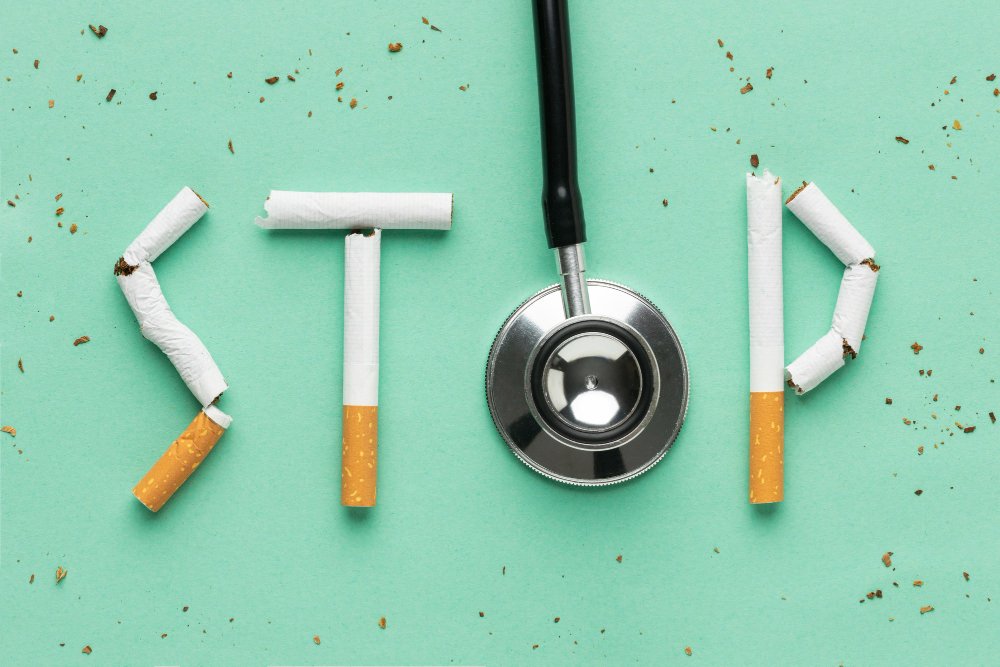
Why Quitting Smoking Matters
Smoking is one of the leading preventable causes of disease and death worldwide. While most smokers know that smoking harms their health, quitting can feel overwhelming, especially when nicotine addiction, habits, routines, and emotional triggers are involved.
The good news? You don’t need willpower alone. There are practical, evidence-based, and easy methods to quit smoking that can help people succeed at any stage of their journey.
This article breaks down those methods into realistic steps you can start implementing today, without guilt, shame, or unrealistic expectations.
By the end, you’ll understand the physical, emotional, and behavioral aspects of smoking addiction and discover the tools and habits that make quitting easier and more sustainable.
Understanding Nicotine Addiction: Why It’s So Hard
Nicotine is a highly addictive substance found in tobacco. When you smoke, nicotine rapidly enters your bloodstream and reaches your brain within seconds. It activates dopamine pathways, the brain’s “reward system”, making you feel relaxed, focused, or relieved in the short term.
Over time, your brain becomes dependent on nicotine to maintain a sense of normalcy. Without it, you experience withdrawal symptoms like:
- Irritability
- Anxiety
- Strong cravings
- Difficulty concentrating
- Increased appetite
- Sleep disturbances
Understanding this cycle is important because it helps you recognize that your struggles are biological, not moral weaknesses.
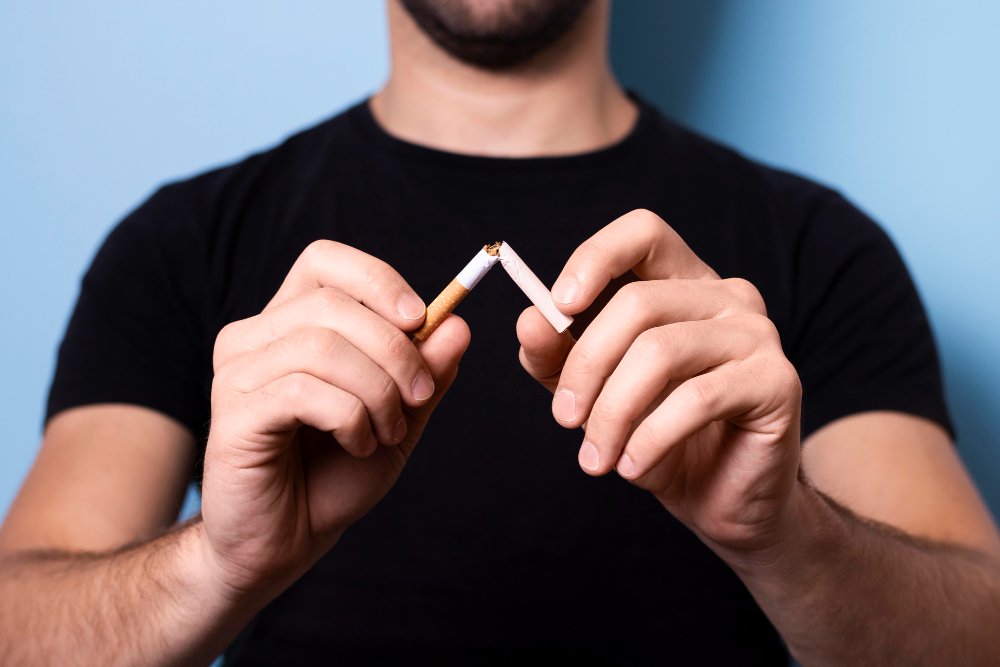
1: Set a Quit Date (But Plan Smart)
Choosing a quit date gives you direction and focus, but it works best when paired with a plan.
Tips for Setting a Successful Quit Date:
- Avoid choosing stressful days (work deadlines, family events)
- Pick a day within the next 2 weeks
- Use this time to mentally prepare and remove triggers
- Tell supportive people about your quit date
A quit date creates momentum and signals to your brain that change is coming.
2: Understand Your Triggers
Triggers are the situations, emotions, or routines that make you reach for a cigarette.
Common triggers include:
- Morning coffee
- Stressful moments
- After meals
- Social gatherings
- Driving
To break the habit, start by identifying what triggers your cravings.
Tip:
Keep a simple journal for a few days. Every time the urge to smoke hits, note:
- Time
- Mood
- Situation
- Intensity of craving
Once you see patterns, you can plan specific coping strategies.

3: Replace the Habit (Not Just the Cigarette)
Smoking is more than nicotine, it’s a habit loop involving routine and comfort. Breaking this loop requires good replacements.
Effective replacement strategies include:
- Drinking water when cravings hit
- Chewing gum, seeds, or sugar-free candy
- Taking a short walk
- Deep-breathing exercises
- Doing hand movements or squeezing a stress ball
These actions help reduce cravings and give your brain new ways to respond.
4: Use Nicotine Replacement Therapy (NRT)
Nicotine replacement therapy can make quitting easier and safer by reducing withdrawal symptoms without cigarette smoke.
Common NRT options:
- Nicotine gum
- Nicotine lozenges
- Patches
- Inhalers (prescription)
- Nasal sprays (prescription)
NRT gradually decreases dependence while helping you wean off nicotine in a controlled way. It’s a well-researched method recommended by many health organizations.

5: Practice Stress-Reduction Techniques
Stress is a major trigger for smoking. Learning healthy stress management improves emotional balance and reduces the urge to smoke.
Powerful stress-reduction techniques include:
- Deep breathing (4–7–8 method)
- Guided meditation
- Yoga or gentle stretching
- Progressive muscle relaxation
- Mindful walking
Even 5–10 minutes a day can reduce stress hormones, which lowers nicotine cravings.
6: Replace Caffeine With Water or Tea
Many people associate smoking with coffee breaks or energy boosts. Caffeine can also increase anxiety and trigger cravings.
A simple change:
- Switch some coffee to water
- Try herbal tea (chamomile, peppermint)
- Limit caffeine in the afternoon
Better hydration supports your body’s detoxification processes during quitting.

7: Move Your Body, Even Briefly
Physical movement reduces cravings, improves mood, and burns off stress chemicals.
Try:
- A short walk
- Light stretching
- Dancing to favorite music
- Chair exercises
- Taking stairs instead of elevators
Movement increases endorphins, the body’s natural mood boosters, which helps reduce dependency on nicotine.
8: Seek Support (You Don’t Have to Do This Alone)
Quitting smoking is easier when others support you.
Support can come from:
- Family & friends
- Smoking cessation groups (in-person or online)
- Health coaches or counselors
- Professional quit-lines
- Therapy
Sharing goals, progress, and setbacks helps normalize the process and keeps you accountable.

9: Celebrate Small Wins
When you quit smoking, progress is not just measured by days without cigarettes, it’s about habits changed and resilience built.
Celebrate:
- One craving resisted
- One stress moment handled differently
- A smoke-free day
- A small health improvement (better sleep, deeper breathing)
These victories build confidence and fuel future success.
10: Reframe Setbacks as Learning Moments
Relapse does not mean failure. Many people try multiple times before quitting for good. What matters is how you use setbacks:
Instead of saying:
“I failed.”
Try:
“I learned what triggers me and how to handle it next time.”
Every attempt provides insight and strengthens your ability to succeed.
The Benefits of Quitting Smoking You’ll Notice First
When you stop smoking, changes begin almost immediately:
Within 20 minutes:
Heart rate and blood pressure improve.
Within 2 weeks–3 months:
Circulation and lung function improve.
Within 1 year:
Risk of heart disease drops significantly.
These early wins motivate lasting change and reinforce your quitting strategy.
Long-Term Health Improvements
People who quit smoking experience long-term benefits, such as:
- Reduced risk of type 2 diabetes
- Lower cancer risk
- Better immune health
- Lower respiratory infections
- Improved cardiovascular function
- Healthier skin and aging processes
Quitting changes your life, not just your lungs.
FAQ:
Can anyone quit smoking easily?
Yes. While addiction is strong, using the right strategies, support systems, and methods makes quitting achievable for almost everyone.
How long do nicotine cravings last?
Most nicotine cravings decrease significantly within 3–4 weeks after quitting, but emotional triggers can linger longer. Coping methods help shorten the intensity.
Do nicotine patches really work?
Yes. Nicotine patches steadily release controlled nicotine to reduce withdrawal symptoms, making quitting easier.
What if I gain weight after quitting?
A slight weight increase can occur, but focusing on healthy habits (balanced eating, movement) minimizes this and improves overall health.
Can quitting smoking improve my sleep?
Absolutely. Many people notice better sleep quality within weeks of quitting.
How can I stay motivated to quit?
Tracking progress, celebrating wins, and reminding yourself of health benefits strengthens motivation.
Leave a Reply