

Habits are the invisible architecture of daily life. They save mental energy, reduce decision fatigue, and when selected by care, quietly move us toward the future we want. But bad habits do the opposite. They chip away at our health, focus, relationships, and long-term goals. Left unchecked, they accumulate into real losses: missed opportunities, chronic disease, and a life that feels smaller than it should. This article explains where bad habits come from, what they cost us, how to change them, and what they do to our health.
Where Bad Habits Come From
Bad habits aren’t evidence of weakness; they’re usually the result of a very normal brain doing its job a little too well. Most unhelpful routines form through a simple loop:
Cue → Routine → Reward.
A cue (stress, boredom, a phone notification, the smell of food) triggers a routine (smoking, snacking, scrolling), which delivers a reward (relief, pleasure, distraction). The brain learns this association and automates it so you repeat it next time often without conscious thought.
Common origins include:
- Stress and emotional regulation. When we lack healthy coping tools, quick fixes sugar, nicotine, doom-scrolling become default strategies.
- Environment and accessibility. We’re more likely to repeat whatever is easy, visible, and socially normalized.
- Short-term reward bias. The brain prioritizes immediate comfort over distant benefits. It’s simply easier to do what feels good now than what pays off later.
- Narratives and identity. Quiet beliefs like “I’m not a morning person” or “I have no willpower” become self-fulfilling scripts that keep the loop running.
The good news: the same loop that builds bad habits can be redesigned to build better ones.

What Bad Habits Cost Us
1) Health and Longevity
Unhealthy eating, inactivity, poor sleep, smoking, and excessive alcohol are linked to chronic illnesses such as heart disease, type 2 diabetes, hypertension, fatty liver disease, and certain cancers. These conditions often develop silently for years, making bad habits uniquely dangerous: damage accumulates long before it’s obvious.
2) Mental and Emotional Well-Being
Bad habits drain cognitive bandwidth and resilience. Constant notifications fragment attention; late-night screen time undermines sleep; procrastination fuels anxiety and guilt. Over time, mood, focus, and self-confidence all suffer.
3) Time, Money, and Opportunity
Every habit has an opportunity cost. Two hours of nightly scrolling is fourteen hours a week nearly a full waking day lost to a routine you didn’t consciously choose. Unhealthy routines can also be expensive (e.g., daily takeout, cigarettes, impulse purchases), diverting resources from education, travel, family, or investment in your future.
4) Relationships and Self-Trust
When habits repeatedly conflict with your values (e.g., “I’ll start tomorrow”), you erode trust in your own word. That self-doubt bleeds into relationships: you’re more irritable, less present, and less reliable.

How to Change a Bad Habit
You don’t need perfect willpower. You need a smarter system. Use this practical framework:
- Name the loop.
Write down: What is the cue? What is the routine? What is the reward? If the cue is stress and the routine is late-night snacking, the reward may be comfort and relief. - Keep the cue and reward; redesign the routine.
The brain craves the reward, not the exact routine. If you want comfort and relief, swap chips for a short walk, a hot tea, or a five-minute breathing exercise. Replacement beats removal. - Make the good easy and the bad hard.
- Put fruit at eye level; move junk food out of the house.
- Charge your phone outside the bedroom; leave a book on the pillow.
- Lay out workout clothes the night before; schedule the session with a friend.
- Shrink the first step.
Start with a two-minute version: one push-up, one paragraph, one minute of meditation. Momentum is more reliable than motivation. - Use implementation intentions.
Create clear “If–Then” plans: If it’s 7:00 a.m., then I put on my shoes and walk for 10 minutes. Ambiguity is the enemy of follow-through. - Track and celebrate consistency, not perfection.
A simple habit tracker (paper or app) makes progress visible. Aim to “never miss twice.” Slip-ups are data, not defeat. - Design for the hard moments.
Pre-commit: remove temptations, set spending or screen limits, or ask a friend to check in. When future-you is tired, present-you should have already put guardrails in place. - Upgrade identity.
Instead of “I want to quit smoking,” try “I’m becoming a non-smoker.” Behaviors follow identity; even small wins reinforce the story you tell about yourself. - Ask for help when needed.
Health coaches, clinicians, therapists, and structured programs provide tools, accountability, and compassionate expertise especially for addiction, disordered eating, or mood concerns.
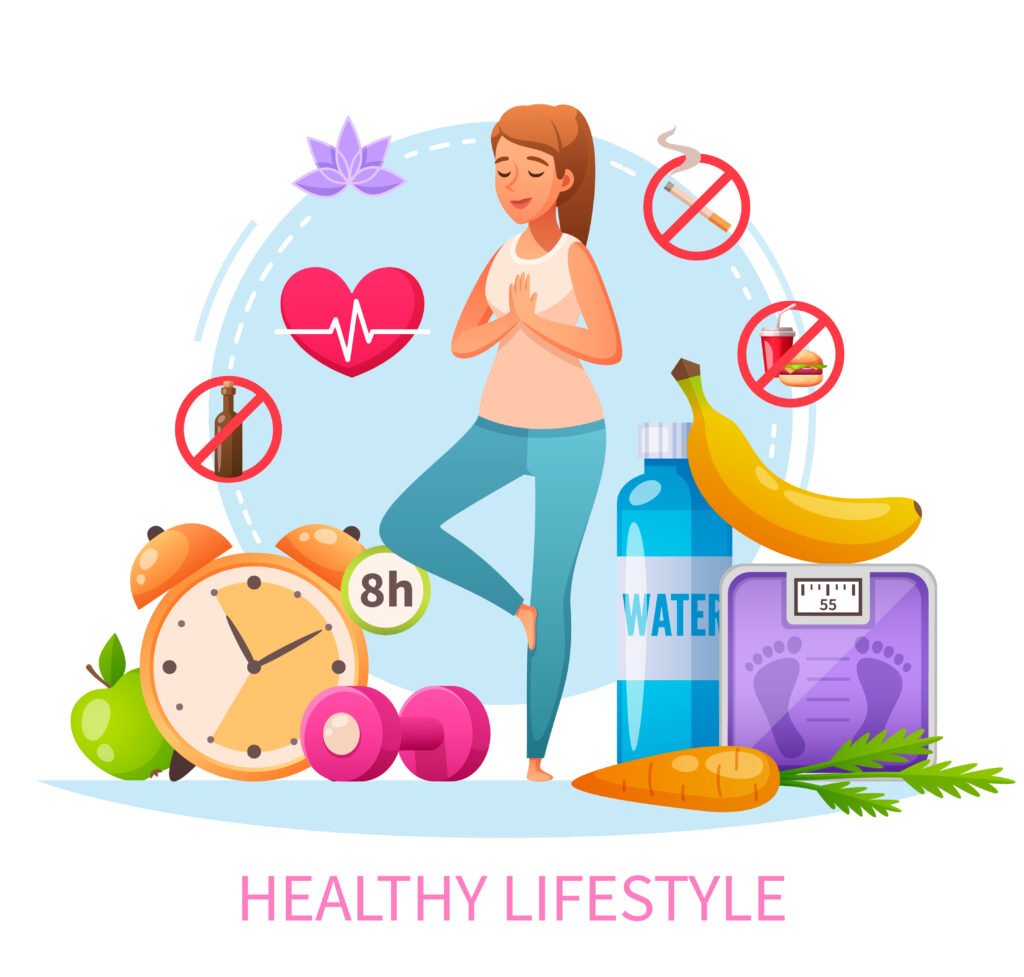
What Bad Habits Do to Our Health Specifically
- Nutrition:
High-sugar, ultra-processed eating spikes blood glucose and insulin, promotes visceral fat, and increases inflammation. Over time, this raises risk for type 2 diabetes, cardiovascular disease, and some cancers. It also causes energy crashes that drive more cravings a self-reinforcing loop. - Physical Inactivity:
Sitting for most of the day reduces insulin sensitivity, impairs blood flow, weakens muscles, and slows metabolism. Even short “movement snacks” (3–5 minutes each hour) improve glucose control and mood. - Sleep Deprivation:
Chronic short sleep elevates cortisol, disrupts appetite hormones (ghrelin/leptin), increases cravings for high-calorie foods, impairs memory and reaction time, and heightens risk for depression and cardiometabolic disease. - Nicotine and Alcohol:
Nicotine constricts blood vessels and damages the cardiovascular and respiratory systems. Excess alcohol burdens the liver, impairs sleep quality, increases accident risk, and is linked to several cancers. “Weekend-only” excess still counts. - Stress Mismanagement:
When stress is unmanaged, we default to quick comforts. Chronically elevated stress hormones can worsen blood pressure, blood sugar, inflammation, and immune function. Healthy coping (breathwork, walking, social connection, journaling) is preventive medicine. - Screens and Social Media Overuse:
Late-night scrolling delays sleep; constant notifications fragment attention and amplify anxiety. Boundaries batching notifications, screen-free meals, and a bedtime device curfew protect mental clarity and circadian rhythm.
A Simple Starter Plan (30 Days)
- Week 1: Pick one habit. Track it daily. Add friction to the old routine; make the new routine obvious and easy.
- Week 2: Add a two-minute version of a keystone habit (walk after lunch, lights-out time, or a veggie with every meal).
- Week 3: Introduce an “If–Then” plan for your toughest trigger. Recruit an accountability buddy.
- Week 4: Review data. What worked? What didn’t? Adjust environment and identity statements. Celebrate streaks; recommit to “never miss twice.”

Final Thoughts: Progress Over Perfection
Bad habits don’t make you flawed; they make you human. And humans can learn. By redesigning cues, swapping routines, and protecting rewards that truly serve you rest, connection, energy you can reclaim the time, health, and confidence that bad habits quietly steal.
At Wiser Health, we believe change should be compassionate, measurable, and personalized. If you’d like structured support habit tracking, evidence-based programs, and coaching our team and tools can help you translate small wins into lasting transformation.
This article is educational and not a substitute for medical advice. If you’re concerned about a habit that affects your health or safety, consider consulting a qualified healthcare professional. And you can book an appointment with physician.
FAQ
1. What is the main cause of bad habits?
Bad habits usually form through the cue–routine–reward loop. When stress, boredom, or emotions trigger a behavior that provides quick relief or pleasure, the brain learns to repeat it automatically.
2. Can bad habits really harm your health?
Yes. Unhealthy eating, inactivity, poor sleep, smoking, and excessive alcohol can lead to chronic diseases like heart disease, diabetes, and hypertension often developing silently over time.
3. What’s the best way to break a bad habit?
Keep the same cue and reward but change the routine. Make the good choice easy and the bad one hard, start small (two-minute version), and use clear “If Then” plans to stay consistent.
4. How long does it take to break a habit?
It varies by person and behavior, but research suggests that building or breaking a habit typically takes between 21 and 66 days of consistent effort.
5. Why do people relapse into old habits?
Because stress, fatigue, and familiar cues can reactivate the habit loop. Designing your environment and identity along with accountability helps prevent relapse.
6. What are some healthy habits to replace bad ones?
Examples include short walks instead of snacking, journaling instead of doom-scrolling, reading before bed instead of screen time, and deep breathing instead of smoking.
7. When should I seek professional help for a habit?
If a habit affects your health, safety, or relationships such as addiction, disordered eating, or chronic stress consult a qualified healthcare provider or coach.
Leave a Reply